





| Herkunftsort: | China |
|---|---|
| Markenname: | Zion communication OR OEM |
| Zertifizierung: | ISO, CE, RoHS, UL |
| Modellnummer: | ZF-Serverschrank |
| Min Bestellmenge: | 1.000 PC |
| Verpackung Informationen: | 1 PC-/Plastictasche, PCS/Carton |
| Lieferzeit: | Normalerweise 10 Arbeitstage |
| Zahlungsbedingungen: | T/T, L/C |
| Versorgungsmaterial-Fähigkeit: | 30.000 PCS/Monat |
| Modell: | Server-Rack-Schrank | Bnad: | Zion-Kommunikation |
|---|---|---|---|
| Farbe: | Schwarz, Grau | Ladekapazität: | 60kg |
| Hervorheben: | Reinforced Steel Frame Server Cabinet,High-Airflow Doors Rack Enclosure,1000 kg Static Load Capacity Data Center Cabinet |
||
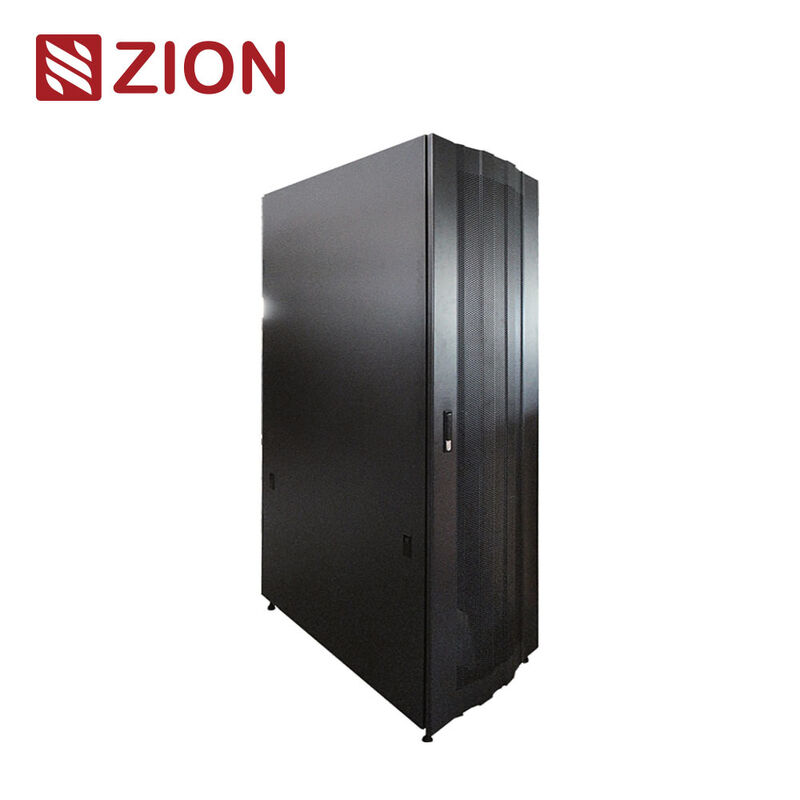
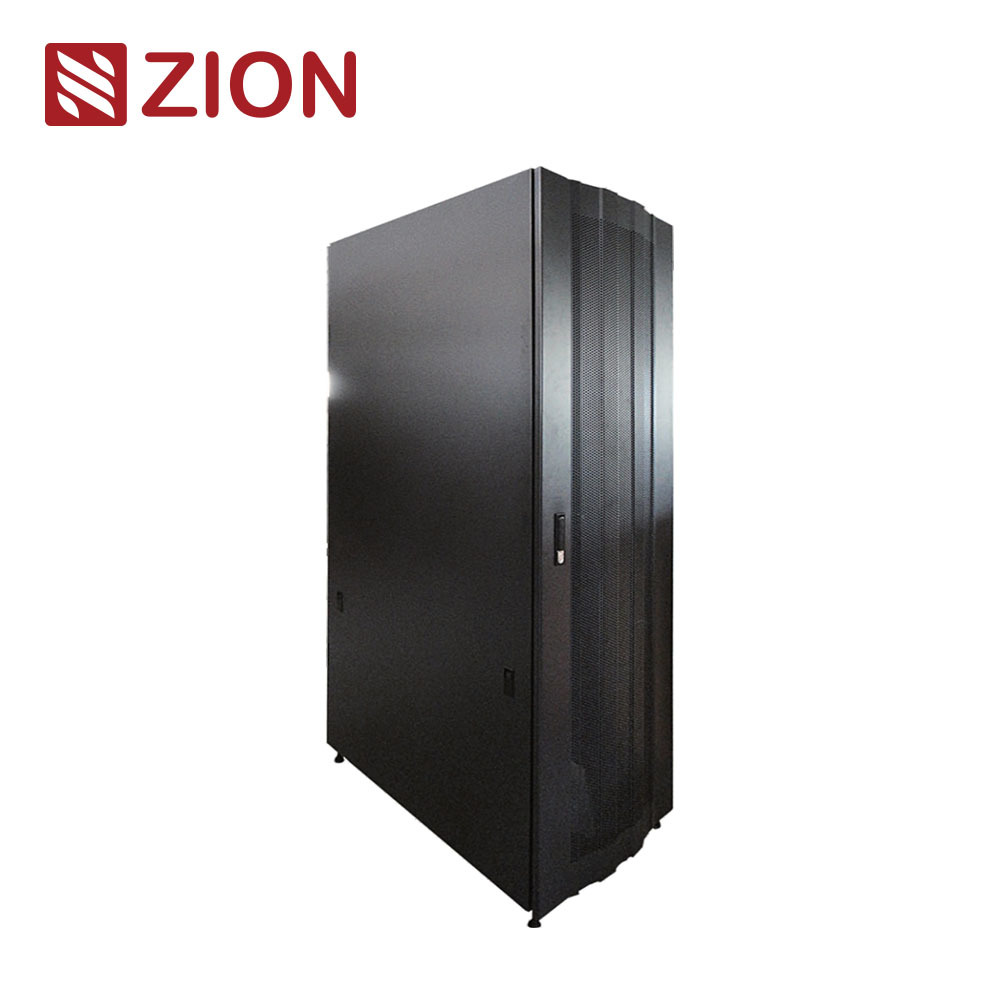
The ZF Server Cabinet is a 19-inch rack enclosure designed for infrastructure environments that demand structural strength, cooling efficiency, secure equipment housing, and long-term service reliability. It targets data centers, enterprise IT rooms, telecom facilities, and other high-density network installations.
Compared with light-duty network racks, the ZF series is positioned as a server-grade cabinet. That difference matters when your project includes heavier equipment, deeper cabinets, stricter cable routing discipline, and a need to reduce vibration, deformation, or cooling bottlenecks over time.
The ZF series is built around strength, ventilation, access convenience, cable management, and deployment flexibility. These are the features that usually decide whether a cabinet remains easy to use after installation.
| Feature | Specification / Design Point | Why It Matters |
|---|---|---|
| Reinforced Steel Frame | Nine-fold profiled welded structure | Improves rigidity and load-bearing performance for heavier IT equipment |
| High-Airflow Doors | Perforated front single door and perforated rear dual door, ventilation rate over 50% | Supports better cooling efficiency in server deployments |
| 180° Door Opening | Wide opening angle for front and rear access | Makes equipment installation and maintenance easier |
| Removable Side Panels | Quick access with moon-shaped lock | Improves side access for service and cable work |
| Feet & Castors | Adjustable feet plus castors | Supports leveling, positioning, and site movement |
| Flexible Cable Routing | Top entry, bottom entry, and cable rings | Helps maintain organized cabling and airflow discipline |
| Delivery Flexibility | Welded or flat-pack delivery | Lets projects choose faster deployment or lower freight cost |
For engineering and procurement teams, the most useful specifications are material thickness, load capability, protection level, coating process, and standards compliance. These determine whether a cabinet will hold up in real installations and remain compatible with global 19-inch equipment.
| Item | Specification | Selection Meaning |
|---|---|---|
| Frame Material | Nine-fold profiled SPCC steel | Designed for higher structural rigidity and load-bearing support |
| Other Parts Material | SPCC high-quality cold rolled steel | Common, reliable metal base for enclosure components |
| Mounting Profile Thickness | 2.0 mm | Important for rail strength and equipment mounting stability |
| Mounting Angle Thickness | 2.0 mm | Improves structural support under load |
| Other Structure Thickness | 1.2 mm | Balances cabinet strength and material efficiency |
| Surface Treatment | Degreasing → Pickling → Phosphating → Electrostatic Powder Coating | Helps corrosion resistance and finish durability |
| Static Loading Capacity | Up to 1000 kg | Critical threshold for server and dense equipment deployments |
| Protection Level | IP20 | Suitable for indoor controlled environments |
| Compliance | ANSI/EIA RS-310-D, IEC 60297-2, DIN 41491 Part 1 | Supports compatibility with global 19-inch IT and telecom equipment |
The ZF series is best matched to controlled indoor environments that need secure equipment housing and predictable airflow. It is especially relevant where cabinet space is treated as operational infrastructure rather than simple storage.
| Application | Typical Requirement | Recommended Cabinet Focus |
|---|---|---|
| Data Centers | High equipment density, cooling path discipline, structured cabling | Choose perforated doors, deeper cabinets, and accessory support |
| Enterprise IT Rooms | Mixed equipment, service access, reliable mounting structure | Balance cabinet depth with future expansion and cable management |
| Telecom Facilities | Long service life, access control, standards compliance | Prioritize structural strength, grounding, and lock security |
| High-Density Network Rooms | Airflow, cable routing, serviceability | Use cable entry planning and door access clearance early in design |
For cabinet selection, the real decision is not just U height. Engineers should decide based on equipment depth, cable path volume, airflow requirement, freight method, and service access constraints.
| If your project looks like this | Main concern | Better choice | Why |
|---|---|---|---|
| Heavy servers or dense active equipment | Structural load and rail strength | ZF server cabinet with reinforced frame | Up to 1000 kg static load and 2.0 mm mounting sections |
| Hot aisle / cold aisle style airflow planning | Ventilation efficiency | Perforated front and rear door version | Over 50% ventilation rate helps airflow management |
| Project site has difficult transport access | Freight and building entry constraints | Flat-pack delivery | Reduces transport volume and may ease site handling |
| Fast installation with minimal assembly time | Deployment speed | Welded delivery | Quicker site setup for experienced installers |
| Large cable volume or 800 mm width projects | Cable organization | 800 mm width with vertical cable manager | Provides better side space for cable routing |
| Basic light-duty network hardware only | Budget sensitivity | Check whether a lighter rack is sufficient | Do not over-specify a server cabinet if load and density are low |
The ZF series covers multiple U heights and width/depth combinations. In practice, selection should follow equipment depth, side cable space requirement, and future expansion margin.
| Typical Need | Suggested Width × Depth | Common U Options | Example Models |
|---|---|---|---|
| Space-sensitive standard rack deployment | 600 × 600 / 600 × 800 mm | 18U, 22U, 27U, 32U, 37U, 42U, 45U, 47U | ZF6618, ZF6822, ZF6832, ZF6842, ZF6845, ZF6847 |
| Deeper equipment or more rear cable clearance | 600 × 900 / 600 × 1000 / 600 × 1200 mm | 18U to 47U depending on model | ZF6918, ZF6032, ZF6042, ZF6045, ZF6047, ZF6242, ZF6245, ZF6247 |
| Extra side cable space and 800 mm platform | 800 × 600 / 800 × 800 / 800 × 900 / 800 × 1000 / 800 × 1200 mm | 18U, 22U, 27U, 32U, 37U, 42U, 45U, 47U | ZF8618, ZF8822, ZF8927, ZF8032, ZF8042, ZF8045, ZF8047, ZF8242, ZF8245, ZF8247 |
| Standard cabinet colors | RAL 9004 / RAL 7035 / Other optional color | — | Configured by project requirement |
Cabinet decisions often look simple during procurement, but the real cost shows up later through freight, handling, assembly time, cooling performance, and maintenance access. The ZF series gives you useful trade-offs to manage these variables early.
| Evaluation Area | Lower-Spec Cabinet Risk | ZF Server Cabinet Advantage | Practical Effect |
|---|---|---|---|
| Structure & Load | Frame distortion or reduced confidence under dense loads | Reinforced frame, 2.0 mm mounting sections, up to 1000 kg static load | Better fit for heavier IT equipment |
| Cooling | Poor ventilation and heat retention | Perforated front and rear door design | Supports better airflow planning |
| Service Access | Slow maintenance and limited side access | 180° door opening and removable side panels | Faster installation and servicing |
| Cable Management | Messy routing and blocked airflow | Top/bottom cable entry and cable rings; 800 mm options with vertical managers | Improves rack cleanliness and maintainability |
| Logistics | Freight inefficiency or difficult site handling | Choice of welded or flat-pack delivery | Lets procurement optimize transport and site work |
| Expandability | Accessory limitations | Compatible with shelves, PDUs, cooling units, cable managers, and smart modules | Improves project flexibility over the cabinet lifecycle |
The ZF Server Cabinet is a practical choice for projects that need more than a basic 19-inch enclosure. Its reinforced steel structure, airflow-ready door design, removable access panels, flexible cable routing, and multiple size combinations make it well suited for server rooms, telecom facilities, and high-density infrastructure deployments.
For the best result, confirm five parameters before ordering: required U height, cabinet width, cabinet depth, delivery method (welded or flat-pack), and whether vertical cable management or accessory integration is needed. That information usually determines the right model faster than comparing part numbers alone.